


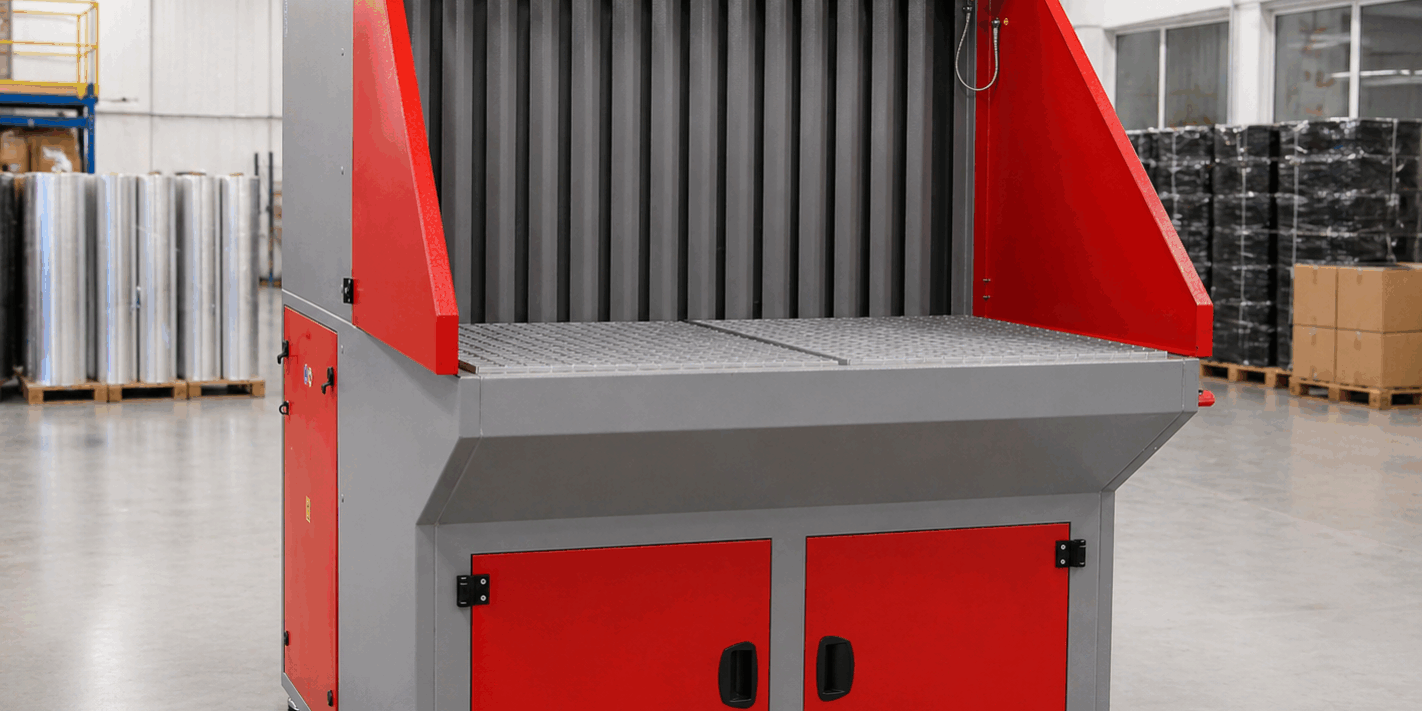
UES-UNI Grinding and Welding Workstation – Effective Filtration of Dust and Welding Fumes in Production Plants
During welding, grinding, cutting, and metalworking processes, significant amounts of process dust and welding fumes are generated, which can adversely affect employee health, production quality, and the condition of workshop equipment. Increasingly stringent occupational safety requirements drive enterprises to seek effective solutions for eliminating contaminants directly at source.
One of the most efficient methods for protecting workspaces is the deployment of a grinding and welding workstation equipped with a local extraction and air filtration system. The UES-UNI is such a solution – a modern workstation designed for operation during welding and grinding processes.
Why is Local Exhaust Ventilation So Critical?
Fine dust particles and welding fumes containing substances that pose a hazard to worker health are generated during metal welding and grinding. Conventional general ventilation is frequently insufficient, as contaminants disperse throughout the production hall before being extracted.
Local exhaust ventilation is a significantly more effective solution, capturing dust and fumes directly at the point of emission. This minimises contaminant concentrations within the worker’s breathing zone, thereby improving occupational comfort and safety.
For more information, please refer to the article on the hazards of welding fumes and the material describing ventilation and dust extraction in industrial halls.
UES-UNI Grinding and Welding Workstation – Design and Operating Principle
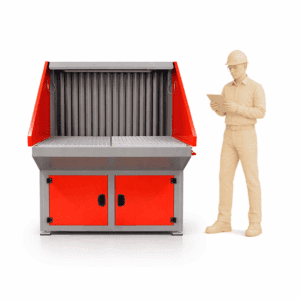
The UES-UNI grinding and welding workstation is a compact workspace engineered for the extraction and filtration of grinding dust and welding fumes generated during metalworking.
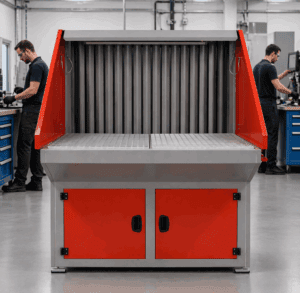
The unit is equipped with a perforated downdraught work surface and a rear extraction hood, enabling effective contaminant capture from multiple directions. This configuration enhances extraction efficiency during both welding and intensive grinding of steel components.
The contaminated air is subsequently routed to the filtration system, where dust is separated from the airflow. The cleaned air can be recirculated back into the room, reducing energy losses associated with space heating in the production hall.
Effective Filtration of Industrial Dust
Grinding processes generate substantial volumes of fine dust, which can settle on machinery, installations, and production components. In the case of welding, an additional issue is posed by welding fumes containing ultra-fine metal particles.
The UES-UNI workstation has been designed to ensure high filtration efficiency and maintain stable operating parameters even under intensive duty cycles. This enables a reduction in dust levels within the hall and improves working conditions for operators.
Extraction of Grinding Dust and Welding Fumes – Requirements of Modern Production Plants
Modern industrial enterprises place increasing emphasis on air quality at workspaces. The effective extraction of grinding dust and welding fumes influences not only worker safety, but also machinery reliability, production quality, and facility maintenance costs.
Modern workstations equipped with a filtration and ventilation system allow contaminants to be removed directly at the source of emission, restricting dust dispersion throughout the entire production hall. This facilitates the maintenance of a cleaner working environment and ensures compliance with occupational health requirements.
Applications of an Extraction-Equipped Grinding Workstation
The UES-UNI workstation is utilised across numerous industrial sectors, including:
- steel structure fabrication plants,
- locksmith workshops,
- metalworking companies,
- machinery industry production plants,
- enterprises manufacturing stainless steel components,
- welding shops,
- repair and maintenance workshops.
The unit performs excellently wherever effective removal of grinding dust and welding fumes is required without the necessity of installing extensive centralised systems.
How to Select a Grinding and Welding Workstation for a Production Plant?
When selecting a grinding and welding workstation, consideration should be given to the extraction system capacity, filtration efficiency, ergonomics, and the adaptability of the unit to specific production processes. The method of capturing contaminants directly at the source of emission is also of key importance.
Modern workstations equipped with a perforated work surface and an extraction wall allow for the effective removal of grinding dust and welding fumes without the need for costly centralised installations. This enables the enterprise to swiftly improve working conditions and reduce operating costs.
Benefits for the Enterprise
The implementation of a grinding and welding workstation equipped with a filtration and ventilation system delivers numerous organisational and economic benefits:
- improved air quality at the workstation,
- enhanced occupational safety for employees,
- restricted dust dispersion within the hall,
- reduced cleaning and machinery maintenance costs,
- improved working comfort for operators,
- capability for clean air recirculation,
- reduction in thermal energy losses,
- compliance with working environment protection requirements.
The Grinding and Welding Workstation as an Element of Modern Production
Contemporary industrial plants pay closer attention to occupational safety, energy efficiency, and the quality of the production environment. The deployment of workstations equipped with local dust and welding fume extraction effectively fulfils these objectives and elevates workplace organisation standards.
The UES-UNI grinding and welding workstation represents a modern solution for enterprises seeking effective filtration of contaminants generated during welding, grinding, and metalworking. By combining a functional work area with an efficient filtration system, the unit supports the creation of safe and productive workstations in modern industrial plants.
Do You Require Effective Extraction of Dust and Welding Fumes?
Contact Klimawent specialists to select a solution tailored to the requirements of your production plant.
FAQ – Frequently Asked Questions
Is the UES-UNI workstation suitable for both welding and grinding?
Yes. The workstation is engineered to effectively capture both grinding dust and welding fumes generated during metalworking processes.
What are the primary advantages of local exhaust ventilation?
Local exhaust ventilation removes contaminants directly at the point of emission, thereby reducing operator exposure to dust and fumes and improving overall air quality within the production hall.
Which industries utilise the UES-UNI workstation?
The unit is deployed in steel structure fabrication plants, locksmith workshops, metalworking companies, welding shops, and machinery industry production facilities.
Can the cleaned air be recirculated back into the production hall?
Yes. Following passage through the filtration system, the purified air can be redirected back into the room, which helps to minimise thermal energy losses.
Can the UES-UNI workstation replace a centralised dust extraction system?
In many instances, yes. The workstation with local extraction effectively removes contaminants directly at source, eliminating the necessity of installing extensive centralised networks for individual workstations.
What types of contaminants does the grinding and welding workstation remove?
The unit is designed for the extraction and filtration of grinding dust, process dust, and welding fumes generated during metalworking operations.
